
Why Slip Collars Are Dangerous and Safer Alternatives for Dog Training
By Giannis Georgiakos
PDT-BC, ACDBC
Dog trainer, Behaviorist specialist
International Association Animal Behavior Consultant
Greece
Tel. 2102833722
Mob. 6932410315
Introduction
If you love your dog, you want to provide the best training and safety. You may have heard from trainers or online groups that the Slip Collar (also known as choke chain or slip lead) is “effective” and “non-violent.” Some even claim it’s “just a tool to help your dog learn quickly.”
The truth? That’s completely false. Slip Collars are not safe, not gentle, and can cause serious health and behavioral problems. In this article, we’ll explain why, backed by scientific evidence, real-life examples, and safer alternatives that truly respect your dog.
What Is a Slip Collar and Why Do Some Recommend It?
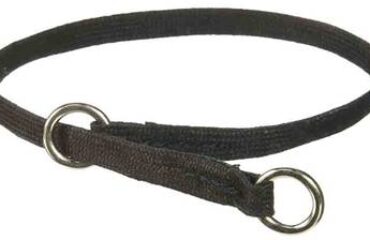
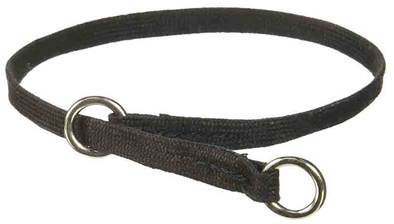
A Slip Collar tightens around the dog’s neck when they pull on the leash. The idea is that pressure will stop pulling.
Some trainers say:
“It’s not violent; it’s just a tool for control.”
Others claim:
“We only use it to teach basic commands.”
These statements are misleading. Pressure on the neck is a form of force, even if there’s no blood or visible injury. And the consequences can be severe.
Real-Life Example
Imagine George, owner of a large dog. His trainer said:
“Use a Slip Collar; your dog will learn to walk calmly.”
At first, it seemed to work. The dog stopped pulling. But after a few weeks, George noticed coughing, anxiety, and reluctance to go for walks. The vet diagnosed a tracheal injury and advised immediate discontinuation of the collar.
This is not an isolated case—it happens often.
Physical Health Risks
Scientific studies are clear:
– Trachea and esophagus injuries – Continuous pressure can cause tracheal collapse and breathing difficulties.
– Thyroid gland damage – Pressure affects metabolism and causes hormonal imbalances.
– Neurological issues and spinal injuries – Sudden corrections can damage nerves and even cause paralysis.
– Increased intraocular pressure – Especially in brachycephalic breeds (Pugs, Bulldogs), raising eye health risks.
Psychological Impact
Slip Collars harm not only the body but also the mind:
– Anxiety and fear – Pain becomes associated with the owner or environment, creating negative associations.
– Aggression – Dogs may link pain to other dogs or people, leading to aggression.
– Reduced learning ability – Fear blocks learning and reduces training effectiveness.
Long-Term Consequences
Prolonged use of Slip Collars can lead to:
– Chronic respiratory conditions
– Permanent neck and spinal damage
– Long-term behavioral issues like aggression and refusal to cooperate
Why Do Some Call It “Gentle”?
It’s a dangerous misconception. Just because there’s no blood doesn’t mean there’s no harm. Pressure on the neck causes pain and fear—that’s force.
Some trainers recommend it because it’s a “quick fix.” But quick fixes come with a heavy price: your dog’s health and trust.
Safe Alternatives
Dog Harness
The safest choice for walks and training:
– Distributes pressure across the chest instead of the neck
– Reduces injury risk
– Compatible with positive reinforcement training
Flat Collar
Better than a Slip Collar and can be used for basic obedience with caution:
– Offers more direct control than a harness
– Doesn’t tighten with every pull
– Requires careful handling to avoid injury
Positive Training Example
Maria, owner of a Labrador, chose a harness and positive reinforcement. It took a little longer, but her dog learned to walk calmly—without pain, fear, or stress. That’s training that builds trust and happiness.
Conclusion
Slip Collars are not safe. They are not “gentle.” They are tools that can cause severe health and behavioral problems. Choose a dog harness for maximum safety or a flat collar for basic control with care. Training should be based on love and trust—not pain.
References
– Nottingham Trent University & University of Nottingham
– Frontiers in Veterinary Science
– PeerJ
– Pet Professional Guild
– SmallDogGuides